
Headaches are something almost everyone has experienced at some point. For many of us, they are an occasional nuisance, perhaps after a long day at work, a poor night's sleep or one too many glasses of wine!
Needless to say, there is nothing quite like a headache to give you another headache!
But for others, headaches become a regular and sometimes debilitating part of life.
I meet patients who have struggled with headaches for years, having tried numerous medications, investigations and treatments without finding lasting relief.
One thing I often explain is that a headache is a symptom, not necessarily a diagnosis.
And getting the diagnosis right is perhaps the most important part of deciding what to do next.
Did you know there are more than 200 types of headaches?
Yes, more than 200 recognised headache disorders!
Fortunately(for you!), we don't need to go through all of them during your appointment.
Headaches can arise from many different mechanisms. Some originate within the nervous system itself, while others are related to conditions affecting the neck, blood vessels or other structures.
Common examples include:
- Migraine, which may involve throbbing pain, nausea and sensitivity to light or sound.
- Tension-type headaches, often described as pressure or tightness around the head.
- Cervicogenic headaches, where pain originates from structures in the neck.
- Occipital neuralgia, involving irritation of nerves around the back of the head.
- Cluster headaches, which cause particularly severe attacks, often around one eye.
And occasionally, headaches are caused by more serious medical conditions requiring urgent attention.
This is why I prefer to understand the headache before reaching for a prescription pad.
How do I work out what's causing your headache?
Much of the diagnosis comes from listening carefully to your story.
Where does the headache begin? Does it travel? Is it throbbing, stabbing or more of a constant pressure? How frequently does it occur?
I also ask about associated symptoms, neck movements, sleep, medications and how the headaches affect your everyday life.
A neurological examination and assessment of the neck may provide further clues.
Not everyone needs a brain scan. Imaging becomes important when the history or examination raises concerns about an underlying condition.
A headache diary can be surprisingly useful too. Recording when headaches occur, how long they last and which medications you take can reveal patterns we might otherwise miss.
Can taking too many painkillers actually cause headaches?
Rather ironically, yes!
This is something I encounter in patients who have been managing frequent headaches for a long time.
Understandably, when a headache starts, the natural response is to reach for something that might help.
But frequent use of headache-relieving medication can contribute to a condition called medication-overuse headache.
This can happen with ordinary painkillers such as paracetamol and anti-inflammatory medications, as well as migraine-specific medications and opioids.
Depending on the medication, regular use on more than 10 or 15 days each month over several months may become problematic.
The result can be a frustrating cycle: headaches lead to more medication, which may contribute to increasingly frequent headaches.
The solution isn't necessarily another painkiller. It often involves reviewing the medications, introducing appropriate preventive treatment and carefully reducing the overused medication.
Please don't abruptly stop regularly prescribed medications without medical advice, particularly opioids.
Could my headaches be coming from my neck?
Absolutely, although not every headache accompanied by neck pain originates there.
The upper neck contains joints, muscles and nerves that share connections with the pathways involved in headache.
This explains why problems arising from the cervical spine can occasionally produce pain extending towards the back, side or even front of the head.
In selected patients, this may be a cervicogenic headache. Irritation of the occipital nerves can also produce sharp or shooting pain around the back of the scalp.
Identifying these patterns is important because their treatment may differ considerably from that of migraine.
What treatments are available?
Treatment depends on the diagnosis.
For migraine, preventive medications, newer migraine-specific treatments and, in selected patients with chronic migraine, Botox may be appropriate.
Where headaches arise from the neck, physiotherapy and rehabilitation are often important.
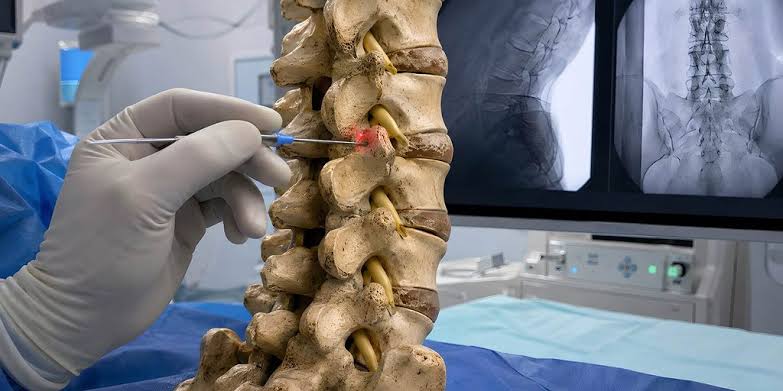
For carefully selected patients, procedures such as greater occipital nerve blocks, cervical facet joint injections or radiofrequency treatments for potential targets may also have a role.
These procedures target particular nerves or structures thought to be contributing to the pain. They are not suitable for every headache, and their benefits can vary.
The important thing is choosing treatment that matches the likely cause, rather than applying the same approach to everyone.
When should I be concerned?
Most headaches are not caused by dangerous conditions.
However, a sudden, extremely severe headache, particularly one reaching maximum intensity within seconds or minutes, requires emergency assessment.
Headaches accompanied by new weakness, confusion, fever with neck stiffness, or significant visual changes also warrant urgent medical attention.
A new headache later in life, or a substantial change from your usual headache pattern, deserves prompt medical review.
My approach to headaches
I find headache medicine particularly interesting because apparently similar symptoms can arise from very different problems.
Two patients may describe almost identical headaches yet require entirely different treatments.
My role as a pain specialist is to understand the pattern, identify possible contributing mechanisms and consider which treatments offer a reasonable prospect of improvement.
For me, the goal isn't simply to make the next headache disappear. It is to reduce how often headaches occur, how severely they affect you and how much of your life they take away.
After all, life is complicated enough without having to plan everything around the next headache!
Best wishes

This article is intended for general information and education only. It is not a substitute for individual medical advice, diagnosis or treatment. The appropriateness of any investigation, medication, supplement, procedure or other treatment depends on your individual circumstances and should be discussed with your treating healthcare professional.