
Surgery usually comes with an expectation. Something has been repaired, removed or corrected, and once the wound heals, life should gradually return to normal.
For most people, that is exactly what happens.
I do meet patients whose recovery has been quite different. Their surgeon is happy, their wound looks good, and their scans may be reassuring. Yet months later, they are still in pain.
Some feel confused. Others are understandably frustrated. A few have started wondering whether they should simply learn to live with it.
I don't think that should be the starting assumption.
How can pain continue when everything has healed?
It helps to remember that healing and pain are related, but they are not quite the same thing.
Surgery involves more than the part of the body we set out to treat. Skin, muscle and other tissues need to be moved or cut, and small nerves may be stretched or irritated along the way.
Usually, the nervous system settles as the tissues recover. Sometimes, however, the pain signals carry on long after the original injury has healed. It's rather like an alarm that keeps ringing even after the problem has been sorted out.
This doesn't necessarily mean the surgery went badly. Nor does it mean the pain is imaginary.
It simply means there may be something else going on that deserves attention.
What does this pain feel like?
There isn't a single pattern.
Some patients describe a persistent ache around the operation site. Others experience sharp, burning or electric-shock sensations. Occasionally, the scar becomes so sensitive that a waistband, bra strap or even a gentle touch is uncomfortable.
I see this after different types of surgery. Someone who has undergone a hernia repair may continue to experience pain in the groin. A person recovering from breast surgery may have discomfort across the chest, under the arm or around a scar.
These symptoms can be particularly unsettling because the original reason for surgery may already have been successfully treated.
Sometimes a small nerve has become unusually sensitive. Sometimes scar tissue, changes in movement or other factors contribute. And sometimes more than one thing is involved.
That is why I am reluctant to assume that every patient with pain after surgery has the same problem.
Does this mean something has gone wrong?
Not necessarily.
This is an important distinction, especially for patients who feel caught between being told their operation was successful and knowing that they still hurt.
Both can be true.
Of course, we must not overlook complications. New swelling, fever, increasing redness, a new lump or rapidly worsening pain should be reviewed promptly by your treating surgical team.
But when the surgery has healed and pain persists, a different sort of assessment may be useful. The question changes from "Did the operation work?" to "What might be keeping this pain going?"
Can anything be done?
Often, there are options worth considering, although the right treatment depends on the cause.
For some patients, time, gentle movement and rehabilitation are enough. Others benefit from medication, help with scar sensitivity or changes to how they return to activity.
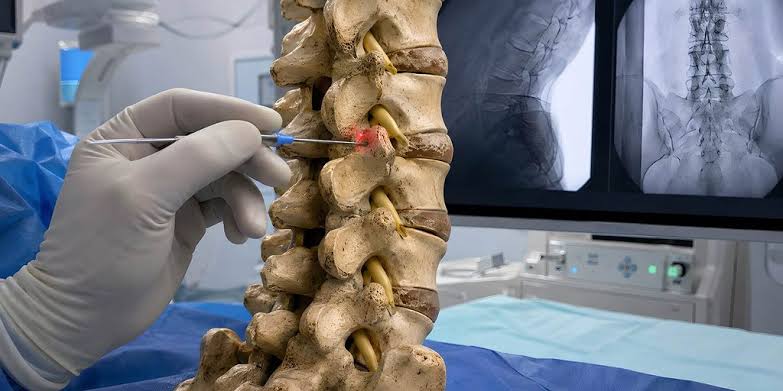
When I suspect that a particular nerve is contributing, a carefully planned interventional pain procedure can sometimes help us understand and manage the pain better. Occasionally, other targeted treatments are worth discussing.
What I want patients to know
One of the hardest parts of persistent pain after surgery is the feeling that you ought to be better by now.
You may be grateful that the original operation was successful and still feel disappointed by the recovery. Those feelings can sit alongside one another.
When I assess someone in this situation, I'm interested in more than the scar or the scan. I want to understand how their pain behaves, what it stops them doing and what they've already tried. Sometimes the best next step is to work with the surgeon again; sometimes it is to explore other ways of managing the pain.
Best wishes

This article is intended for general information and education only. It is not a substitute for individual medical advice, diagnosis or treatment. The appropriateness of any investigation, medication, supplement, procedure or other treatment depends on your individual circumstances and should be discussed with your treating healthcare professional.