
One of the things I often have to explain in pain medicine is that the words acute and chronic can mean something quite different to doctors than they do to patients.
If you are the person experiencing it, pain is pain. A burning foot or an aching back does not suddenly feel less real because it has been present for three months rather than three weeks. The label does not change the experience.
But from a pain specialist’s perspective, the length of time pain has been present can change how we understand it — and, importantly, how we approach treatment.
Acute pain: when the alarm is doing its job
Acute pain is usually protective.
Think of pain as a fire alarm. If you put your hand on a hot stove, the alarm sounds immediately. It gets your attention, tells you there is danger and encourages you to move away. After an injury or operation, pain can serve a similar purpose by encouraging us to protect the area while tissues heal.
In that setting, the alarm is useful. There is a fire, and the alarm is warning us about it.
Chronic pain: when the system changes
Pain that persists or recurs for more than three months is generally described as chronic or persistent pain.
The word “chronic” sometimes worries patients. It can sound as though a doctor is saying the pain will be there forever.
That is not what it means.
It is a description of duration, not a prediction of the future.
With persistent pain, however, the alarm system can begin to behave differently.
Sometimes there is still an ongoing source of pain, such as arthritis or nerve injury. In other situations, the original injury may have healed while the nervous system remains unusually sensitive. The alarm becomes easier to trigger, louder than expected, or remains active even when the original threat has reduced.
This is what we mean when we say persistent pain can become maladaptive. A system designed to protect us can, over time, become overprotective.
That does not make the pain imagined. The alarm is still sounding.
What has changed is the relationship between the alarm and the amount of ongoing tissue danger.
Why the approach has to change
This distinction matters because treatments that make sense for acute pain may be much less useful when pain has become persistent.
If someone has broken an ankle, rest and protection are sensible. If someone with persistent pain avoids movement indefinitely because movement hurts, the result can be loss of strength, confidence and function.
For a pain specialist, the questions therefore begin to change.
Instead of only asking, “What tissue is damaged?”, we may also ask: What started the pain? Is there still an active pain generator? Has a nerve been injured? Has the nervous system become sensitised? What is happening with sleep, movement and function? What treatments have helped, and what has not?
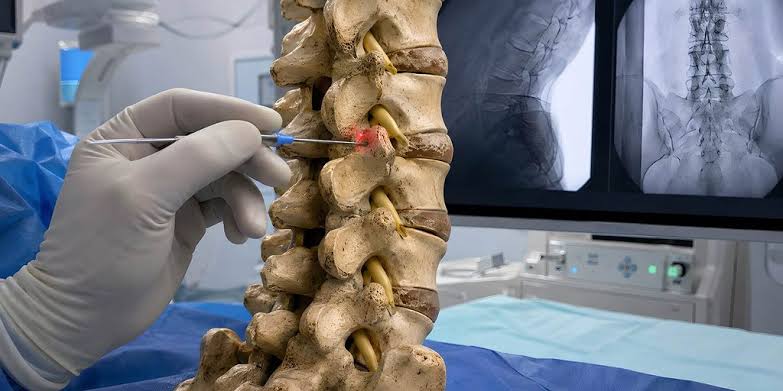
There may still be a specific target that can be treated with an injection, nerve block or radiofrequency procedure. Persistent pain does not mean that procedures have no role.
It means we need to be more deliberate about matching the treatment to the mechanism of pain.
Why a scan cannot tell us how much pain you have
This is also why scans and blood tests can sometimes be frustrating for people living with pain.
Modern medicine can show us bones, discs and joints in remarkable detail, and blood tests can help identify inflammation, infection and other disease processes.
But we do not have a blood test or scan that measures pain itself.
Imaging can be extremely useful when we are looking for a particular problem, excluding something serious or planning treatment. But an abnormality on a scan does not automatically tell us how painful it is.
Degenerative changes and disc bulges, for example, are commonly found in people who have no pain at all. The opposite can also occur: someone may experience severe pain despite relatively reassuring imaging.
The scan still matters.
It simply needs to be interpreted alongside the person — their history, examination, symptoms and function.
The same principle applies to blood tests. A normal blood test does not mean that somebody is not in pain. It simply tells us that the particular biological process we were looking for may not be present.
Seeing a pain specialist may include interventional treatment
For many patients, targeted procedures such as nerve blocks, injections or radiofrequency treatment can play an important role in reducing pain and improving function.
The key is selecting the right procedure for the right pain problem.
A specialist assessment helps determine whether there is a suitable target for treatment, which procedure is most appropriate, and how it fits within the broader management plan.
In some cases, an intervention may provide significant pain relief and create an opportunity to improve movement, participate more effectively in rehabilitation, return to work or regain activities that pain has made difficult.
Pain medicine is rarely about a single treatment in isolation. Depending on the individual, management may combine interventional procedures with medication, physical rehabilitation, psychological strategies and treatment of other contributing factors.
The aim is to use each treatment deliberately and with a clear purpose — to reduce pain, improve function and help the patient move forward.
The doctor as part of the treatment
There is another part of pain medicine that is harder to measure: the relationship between the patient and the clinician.
The physician Michael Balint famously described the idea of the “doctor as a drug.”
He was not suggesting that a good conversation replaces medical treatment. Rather, he recognised that how a doctor listens, explains, reassures and works with a patient can itself influence the experience of illness and treatment.
I think this is particularly relevant in pain medicine.
Many people with persistent pain have spent years repeating their story, undergoing investigations and trying different treatments. Some have also felt that they were not believed because a scan did not provide a neat explanation.
A therapeutic relationship is built on trust, listening and shared understanding. It means taking the pain seriously, being open about uncertainty, explaining what we think may be happening, and working together on a plan that feels clear, realistic and appropriate.
It is part of good medicine.
Pain may feel the same to the person experiencing it whether it has been present for a day or a decade. But understanding how and why pain persists changes the way we approach it.
Sometimes we need to treat the fire.
Sometimes we need to treat the alarm.
And quite often, we need to understand both.
Best wishes

This article is intended for general information and education only. It is not a substitute for individual medical advice, diagnosis or treatment. The appropriateness of any investigation, medication, supplement, procedure or other treatment depends on your individual circumstances and should be discussed with your treating healthcare professional.