I have always found the word rhizotomy fascinating.
The first part of the word — rhizo- — comes from the Greek word for “root”. It is the same root we see in the botanical term rhizome, used to describe an underground stem or root-like structure.
The second part — -tomy — means cutting.
So, taken literally, rhizotomy means “cutting the root.”
It is an old term, and perhaps a rather dramatic one.
In modern pain medicine, however, what we commonly call a rhizotomy does not usually involve surgically cutting a nerve root. Instead, it generally refers to a carefully targeted radiofrequency treatment used to interrupt or modify pain signals travelling through selected sensory nerves.
How does radiofrequency treatment work?
Many joints and other structures in the body have small sensory nerves that carry pain signals back towards the nervous system.
If we believe that a particular joint or structure is contributing to someone’s pain, one treatment option is to target the nerve carrying that signal.
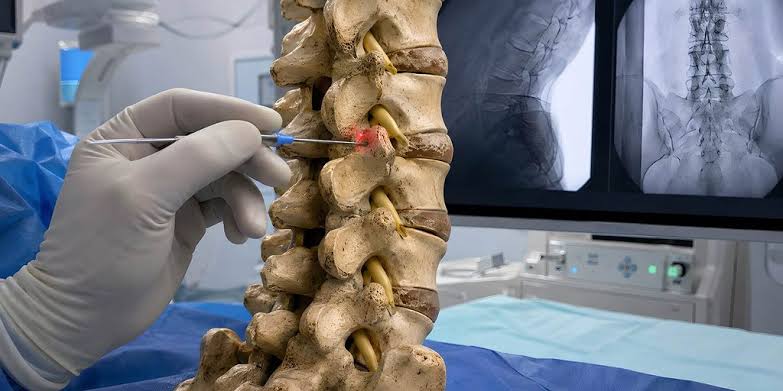
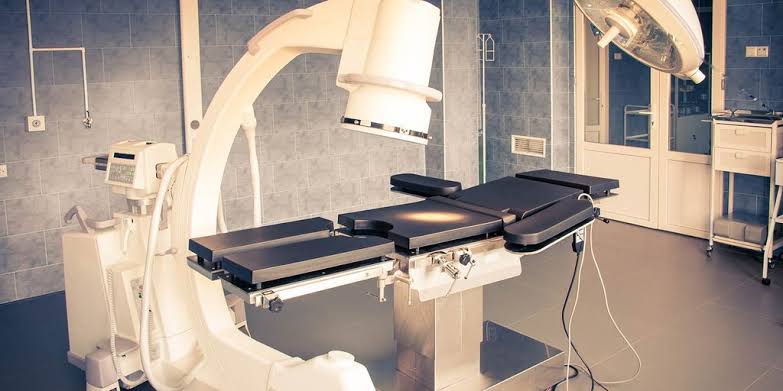
During a radiofrequency procedure, a specialised needle is positioned close to the intended nerve using X-ray or ultrasound guidance.
Radiofrequency energy is then delivered through the needle.
With conventional or thermal radiofrequency treatment, controlled heat is used to create a small, targeted lesion in the sensory nerve. This reduces its ability to transmit pain signals.
The aim is not to indiscriminately “burn nerves”. It is to identify a specific pain pathway and treat it as precisely as possible.
What is pulsed radiofrequency?
Not every radiofrequency procedure works in the same way.
I also use pulsed radiofrequency, or PRF, for selected pain conditions.
Rather than applying continuous thermal energy, pulsed radiofrequency delivers energy in short bursts while limiting the temperature around the nerve.
The intention is to influence or modulate the way the nerve communicates pain signals without creating the same type of thermal lesion used in conventional radiofrequency treatment.
Which approach is more appropriate depends on the nerve being treated, the type of pain and the individual patient.
Why might I need a diagnostic nerve block first?
For some radiofrequency procedures, particularly those used to treat pain arising from the spinal facet joints, a diagnostic nerve block may be performed first.
A small amount of local anaesthetic with or without steroids is placed around the nerve that we believe is carrying the pain signal.
We then look at what happens.
The question is not simply, “Did your pain score improve?”
I am also interested in what that improvement allowed you to do.
Could you turn your neck more comfortably? Stand for longer? Walk further? Sleep better? Perform an activity that would normally reproduce the pain?
A good response to a diagnostic block can provide useful evidence that we have identified the right target before proceeding to radiofrequency treatment.
Where can rhizotomy and radiofrequency treatment be used?
Radiofrequency treatment is probably best known for chronic neck and lower back pain, particularly pain arising from the cervical or lumbar facet joints.
However, its use extends well beyond the spine.
Depending on the underlying problem, radiofrequency procedures may also be used for selected sacroiliac joint, shoulder, hip and knee pain, as well as certain peripheral nerve and post-surgical pain conditions.
Different nerves require different techniques, and not every type of pain is suitable for radiofrequency treatment.
How long does a rhizotomy last?
Radiofrequency treatment is not usually permanent.
Over time, the treated sensory nerve can recover and the pain may gradually return.
The duration of benefit varies considerably. Some patients experience useful relief for many months or longer, while others may have a shorter or more modest response.
If the procedure means you can exercise again, participate properly in physiotherapy, return to work, sleep better, pick up your children or return to activities that pain had been preventing, then that improvement is meaningful.
If radiofrequency treatment has provided worthwhile benefit and the effect later wears off, repeating the procedure may sometimes be reasonable.
Does it work for everyone?
Not everyone responds to radiofrequency treatment in the same way.
Some people experience substantial and prolonged improvement. Others may have only partial benefit, and some may find that the procedure does not help as much as hoped.
This is why patient selection matters.
Before recommending radiofrequency treatment, I consider the likely source of pain, the examination findings, imaging where relevant, previous treatments, response to diagnostic blocks, anatomy and the individual risks and benefits.
Sometimes radiofrequency treatment is an excellent option.
Sometimes another approach makes more sense.
What are the risks?
Radiofrequency procedures are generally minimally invasive, but they are still medical procedures and carry risks.
These vary depending on the nerve and area being treated, but may include temporary soreness, bruising, numbness or altered sensation. Less commonly, bleeding, infection or nerve injury can occur.
The potential benefits, alternatives and individual risks should always be discussed before deciding to proceed.
A more useful way to think about rhizotomy
Although the word rhizotomy literally means “cutting the root”, modern radiofrequency treatment is much more precise than the name suggests.
We are identifying a pain pathway, selecting a particular sensory nerve and using a controlled treatment to reduce or modify the signal travelling through it.
For the right patient, that can create a valuable period of reduced pain and improved function.
The goal is not simply to make the pain score smaller.
It is to create an opportunity to move better, function better and return to more of the life that pain has been limiting.
Best wishes

This article is intended for general information and education only. It is not a substitute for individual medical advice, diagnosis or treatment. The appropriateness of any investigation, medication, supplement, procedure or other treatment depends on your individual circumstances and should be discussed with your treating healthcare professional.