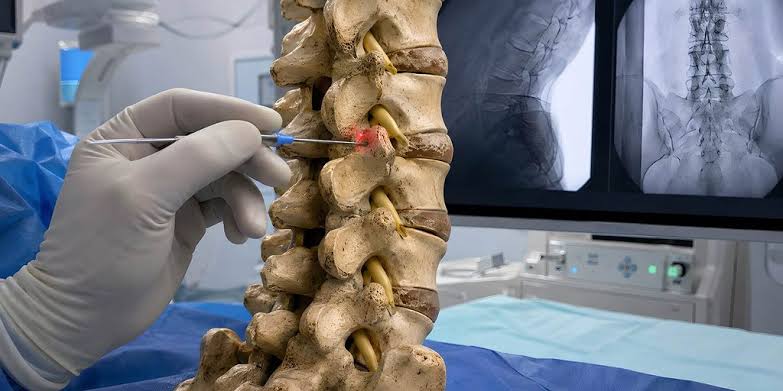
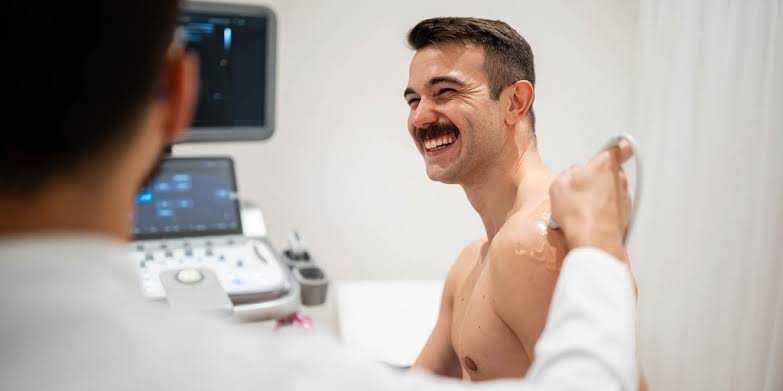
Pain procedures are not limited to injections in the spine.
One of the things that often surprises patients is the range of conditions that can potentially be treated using interventional pain medicine.
Depending on the problem, this may involve a nerve block, epidural injection, joint injection, radiofrequency treatment or another image-guided procedure. I also use PRP (Platelet Rich Plasma) injections in selected musculoskeletal conditions.
The procedure itself, however, is only part of the equation.
Before recommending any intervention, I want to understand where the pain is coming from, what we are trying to achieve and whether there is a reasonable target for treatment.
Below are some of the areas I commonly treat.
Neck and cervical spine pain
Persistent neck pain can arise from several structures, including the small facet joints at the back of the cervical spine.
Depending on the clinical picture, treatment may involve cervical medial branch blocks, facet-related procedures and radiofrequency treatment.
Some patients (for example in Chronic Whiplash Associated Disorder) also experience pain extending towards the shoulder blade, head or upper back, so identifying the likely source is important before deciding what to treat.
Thoracic and mid-back pain
Thoracic or mid-back pain is sometimes overlooked when discussing interventional pain procedures.
Depending on the underlying problem, targeted treatment may involve the thoracic facet joints, spinal nerves or other sensory nerves supplying the chest wall.
Low back pain
Low back pain is one of the most common reasons patients are referred for interventional pain treatment.
Procedures may include epidural injections and radiofrequency treatment for facet-related pain, as well as other targeted spinal injections depending on the diagnosis.
Sciatica and nerve-root pain
When pain arises from an irritated spinal nerve, patients may experience pain travelling into the leg, sometimes with burning, tingling or altered sensation.
Depending on the cause, I may consider epidural injections, transforaminal epidural injections, selective nerve-root procedures or pulsed radiofrequency treatment in selected patients.
Sacroiliac joint pain
The sacroiliac joint, or SIJ, is another potential source of pain around the lower back and buttock.
Treatment may include diagnostic or therapeutic injections and, in selected patients, radiofrequency treatment of the sensory nerves supplying the joint.
Shoulder pain
Interventional treatment for shoulder pain is not confined to injecting the shoulder joint.
Depending on the source of pain, options may include joint or bursal injections, suprascapular nerve blocks and radiofrequency treatment of sensory nerves supplying the shoulder.
These treatments can sometimes be particularly useful when pain is limiting rehabilitation or movement.
Hip and greater trochanteric pain
Hip pain may arise from the hip joint itself or from structures around the outside of the hip.
For persistent hip joint pain, targeted treatment can include blocks and radiofrequency treatment of the sensory branches supplying the joint.
For selected patients with greater trochanteric or bursal-region pain, targeted injections or sensory nerve ablative procedures may also be considered.
Where there is an associated tendon or soft-tissue problem, PRP (Platelet Rich Plasma)injections may sometimes form part of the treatment plan.
Knee, ankle and foot pain
Joint pain can also be treated by targeting the sensory nerves that transmit pain from the joint.
For persistent knee pain, this may involve genicular nerve blocks and radiofrequency treatment.
Similar principles can sometimes be applied to selected ankle and foot joint pain, depending on the anatomy and the underlying condition.
Buttock and posterior thigh pain
The cluneal nerves are sensory nerves supplying areas around the buttock and can sometimes become irritated or entrapped.
Cluneal nerve pain may present as buttock pain, pain around the upper gluteal region or pain extending towards the posterior thigh. In appropriate patients, diagnostic nerve blocks and radiofrequency treatment may be considered.
Persistent pain after surgery
Some patients develop persistent nerve pain following an operation, even after the surgical site itself has healed.
Examples include groin pain following hernia surgery, where nerves such as the ilioinguinal or iliohypogastric nerves may be involved.
I also treat selected patients with persistent nerve pain following breast or mastectomy surgery, where targeted chest-wall or peripheral nerve procedures may be appropriate.
This type of pain often requires careful assessment because the procedure needs to match the particular nerve distribution involved.
Pelvic and coccygeal pain
Selected forms of pelvic, perineal and coccygeal pain may also have interventional options.
Depending on the pain pattern and diagnosis, targeted nerve blocks or procedures involving structures such as the ganglion impar may be considered.
Sympathetic nerve blocks and ablation
In selected pain conditions, particularly where the sympathetic nervous system may be contributing to pain, a sympathetic nerve block/radiofrequency may be considered.
This can include stellate ganglion interventions for selected upper-limb pain conditions, including some patients with complex regional pain syndrome (CRPS). Stellate ganglion block may also be considered in carefully selected patients with chronic pain who have significant co-existing post-traumatic stress symptoms, although the evidence in this area is still evolving.
For selected lower-limb pain presentations, a lumbar sympathetic intervention may also be considered.
These procedures are usually performed using image guidance and are considered on a case-by-case basis depending on the underlying diagnosis and treatment goals.
The procedure should fit the problem
This is not an exhaustive list.
Interventional pain medicine includes a broad range of image-guided and ultrasound-guided pain procedures, including targeted nerve blocks, spinal and epidural injections, joint procedures and radiofrequency treatments.
What matters is not how many procedures are available.
It is whether there is a procedure that makes sense for the pain problem in front of us.
Sometimes that procedure is used to provide treatment. Sometimes a diagnostic block helps us understand the source of pain before deciding what comes next.
And sometimes the right decision is not to perform a procedure at all.
At The Pain Practice, I perform interventional pain procedures at Aegis Health in Murdoch and St John of God Midland Private Hospital.
The goal is always to match the treatment to the individual — and to use an intervention when it has a reasonable opportunity to reduce pain, improve function and help someone move forward.
Best wishes

This article is intended for general information and education only. It is not a substitute for individual medical advice, diagnosis or treatment. The appropriateness of any investigation, medication, supplement, procedure or other treatment depends on your individual circumstances and should be discussed with your treating healthcare professional.