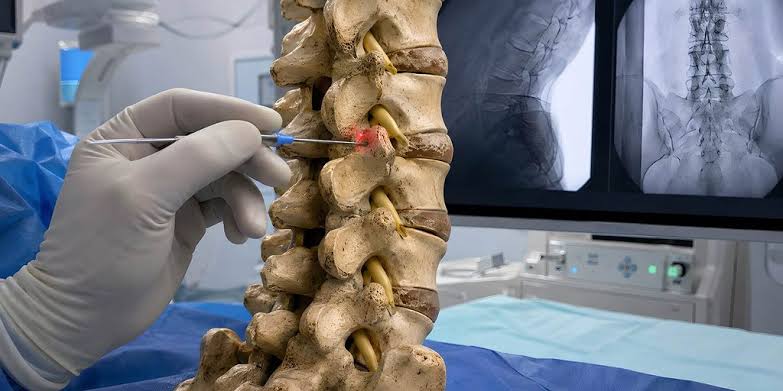

When people think about seeing a pain specialist, they often think about injections, nerve blocks or other interventional pain procedures.
These treatments can play an important role and, for the right patient, may create a valuable window of opportunity to improve movement, function and quality of life.
But pain medicine extends well beyond procedures.
Persistent or chronic pain can affect much more than one joint, nerve or part of the body. Over time, it can influence sleep, movement, confidence, work, mood, relationships and the activities that make everyday life meaningful.
For that reason, sometimes the best approach is not one treatment, but a thoughtful combination of treatments.
This is known as multimodal pain management.
More than one tool in the toolbox
I often think of pain management as having a toolbox.
For one person, the most useful treatment may be an injection or nerve procedure followed by rehabilitation.
For another, it might involve reviewing medication, improving sleep and gradually rebuilding physical activity.
Someone with neuropathic or more complex persistent pain may require a different combination altogether.
The purpose of multimodal pain management is not to simply add more and more treatments.
It is to ask:
Which treatments give this person the best opportunity to function better and get more of their life back?
Ketamine and lignocaine infusions
Ketamine is perhaps better known as an anaesthetic medication, but it also acts on pathways within the nervous system involved in pain processing.
In carefully selected patients, ketamine infusions for chronic pain may be considered when more conventional treatments have provided insufficient benefit.
Lignocaine is also widely known as a local anaesthetic. When given under appropriate medical supervision, however, it can influence the transmission and processing of pain signals.
Lignocaine infusions may therefore have a role in selected patients with neuropathic pain and other complex pain conditions.
Neither treatment is suitable for everybody, and response varies between patients.
If an infusion provides useful pain relief, the next question is what we can achieve during that period of improvement — whether that means better sleep, greater mobility, returning to exercise or progressing with rehabilitation.
Botox in pain medicine
Botulinum toxin, commonly known as Botox, has several established medical uses beyond its cosmetic applications.
One of its best-known roles in pain medicine is the treatment of chronic migraine, although it may also be considered in selected other conditions depending on the underlying diagnosis.
As with any treatment, the important question is whether there is a clear clinical reason for using it and whether it is likely to contribute meaningfully to the overall plan.
Non-invasive neuromodulation
Neuromodulation describes treatments that influence the way nerves communicate and process pain signals.
Some forms require implanted devices, but there are also non-invasive neuromodulation treatments that do not require surgery.
In selected patients, I may incorporate treatments such as BioWave neuromodulation therapy as another option within a broader pain management plan, particularly when we are looking for ways to influence nerve-related pain without immediately moving towards more invasive treatment.
Working with the right clinicians
Physiotherapy, psychology and acupuncture can all have a role in persistent pain management.
Physiotherapy may help restore movement, rebuild strength and confidence, and support a gradual return to activity. Psychology can help with areas such as sleep, pacing, adjustment to pain, fear of movement and managing flare-ups. These approaches sit alongside medical and interventional treatment rather than replacing them.
Acupuncture may also be useful for selected patients. When I recommend it, I usually suggest seeing an appropriately trained Chinese medicine practitioner registered with AHPRA.
Where appropriate, I can recommend physiotherapists, psychologists and acupuncturists whom I know and trust, particularly clinicians experienced in persistent and complex pain.
The aim is to have the right people involved, working towards the same functional goals.
Social prescribing: getting life back into the treatment plan
One of the less recognised aspects of chronic pain treatment — and something I am a big believer in — is social prescribing.
Persistent pain has a tendency to make people’s worlds smaller.
Exercise stops. Hobbies disappear. Social activities become harder. Some people leave work. Others gradually stop doing the things that once gave their week structure, enjoyment or purpose.
Eventually, life can begin to revolve around appointments, scans, medication and pain.
Social prescribing brings a different question into the consultation:
What matters to you, and how can we help you reconnect with it?
That may mean gardening, swimming, volunteering, community exercise, art or creative activities, Men’s Sheds, spending more time with family, or rediscovering a hobby that has gradually disappeared.
These are not simply distractions from pain.
They can help rebuild confidence, routine, social connection and a sense of identity beyond being someone who lives with pain.
Sometimes one of the most useful questions I can ask is not just, “How much does it hurt?”
It is:
“What would you like to get back to doing?”
Putting the pieces together
There is no universal formula for persistent pain treatment.
Some patients may benefit predominantly from an interventional procedure. Others may benefit from an infusion, medication, neuromodulation, physiotherapy, psychology, acupuncture or changes in activity.
For many people, the best result comes from combining several approaches thoughtfully over time.
This is what I mean by multimodal pain management.
It is not about doing everything.
It is about choosing the things that are most likely to help you.
Ultimately, the goal of pain treatment is not simply to produce a better number on a pain scale.
It is to help you move better, function better and return to more of the life that matters to you.
Best wishes

This article is intended for general information and education only. It is not a substitute for individual medical advice, diagnosis or treatment. The appropriateness of any investigation, medication, supplement, procedure or other treatment depends on your individual circumstances and should be discussed with your treating healthcare professional.